
How To Holistically Heal...With Three Simple Healthy Recipes
Halloumi Cheese for All Seasons – Grilled, in Watermelon Salad & in Soups

Experience this Newsletter in all its online glory. Go here
In this edition:
1. Grilled Halloumi with Lemon Juice
2. Halloumi & Watermelon Salad
3. Halloumi in Soups
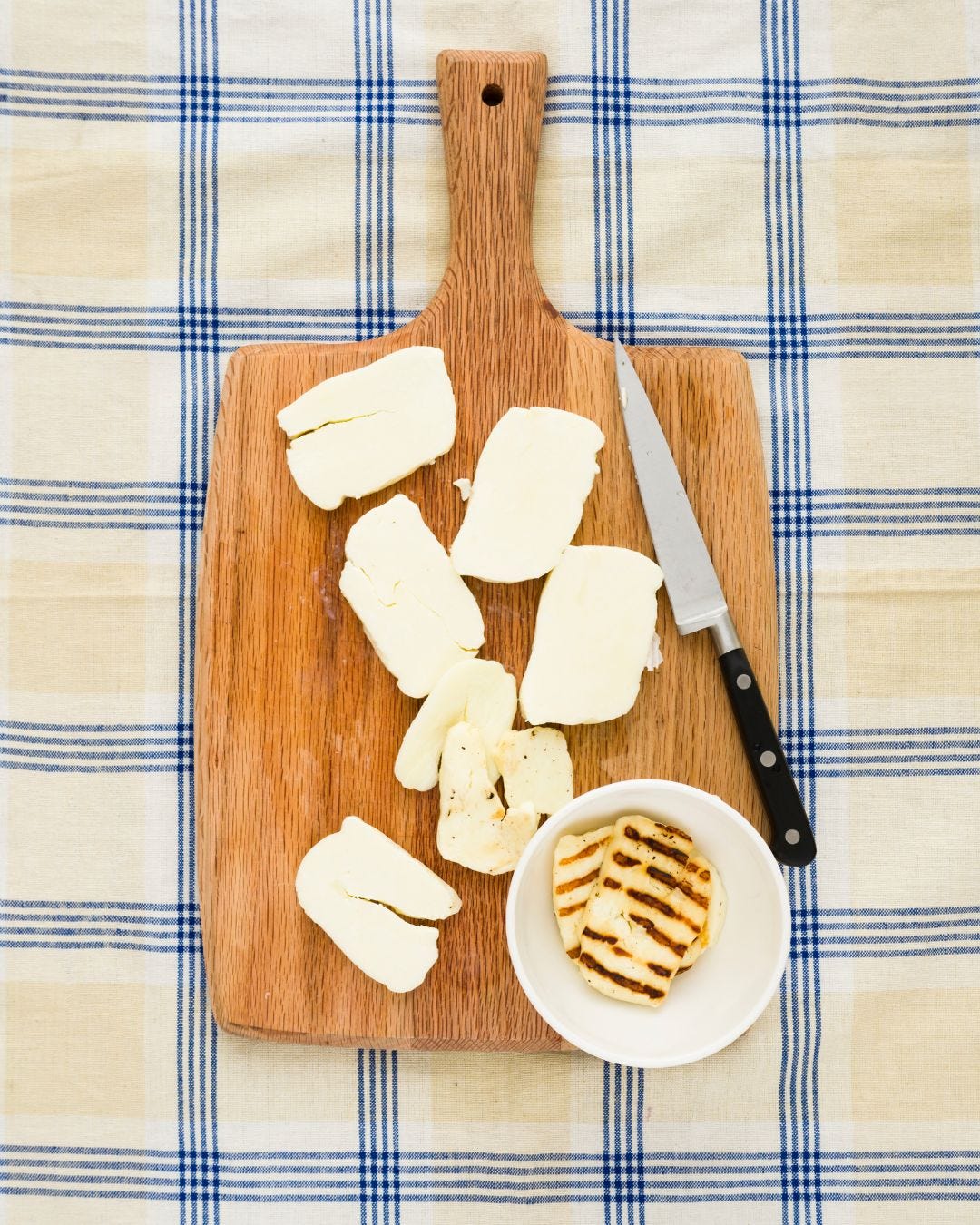
Halloumi is a semi-hard, brined cheese traditionally made from a mixture of goat’s and sheep’s milk though in many modern versions, cow’s milk is also used. It has a firm, springy texture and a salty, tangy flavour. What makes halloumi so beloved around the world is its high melting point, which means it can be grilled or pan-fried without melting, developing a golden crust and a soft, squeaky interior.
Halloumi originates from Cyprus, my ancestral homeland, and has been crafted on the island for centuries, with records tracing back to the Byzantine period. Traditionally, it was made by shepherd families as a way to preserve excess milk. Blocks of halloumi were often folded with sea salt and fresh mint leaves, then stored in a whey and salty brine, both to enhance flavour and to keep the cheese fresh in the days before refrigeration. Remarkably, it is still made in much the same way today.
The process begins with heating fresh sheep or goat milk and adding rennet to curdle it. Once the curds have formed, they are pressed into shape and poached in whey, a distinctive step that gives halloumi its firm, layered texture and its ability to hold its shape when grilled. The cheese is then salted and folded, often with a fragrant mint leaf tucked inside.
I’m sharing this as I prepare to return to Cyprus, the land of my ancestors, with my parents. Cyprus isn’t just the home of halloumi, it’s the home of my lineage, my family stories, and the deep roots of my culture. Halloumi is more than a cheese to me. It’s a symbol of continuity, tradition, and the hands of generations who worked with what they had, honouring the land, the animals, and the seasons.
What I am most excited about is enrolling in a halloumi and anari cheesemaking workshop in my parents’ village. Stay tuned for videos and photos.
Note: Anari is a traditional Cypriot whey cheese, similar in texture to ricotta. It’s made from the whey left over after producing halloumi, giving it a light, creamy flavour. It can be eaten fresh and soft, often with honey, fruit, or bread or salted and dried for grating over dishes.
Here is how we eat halloumi in Cyprus…
1. Grilled Halloumi with Lemon Juice.
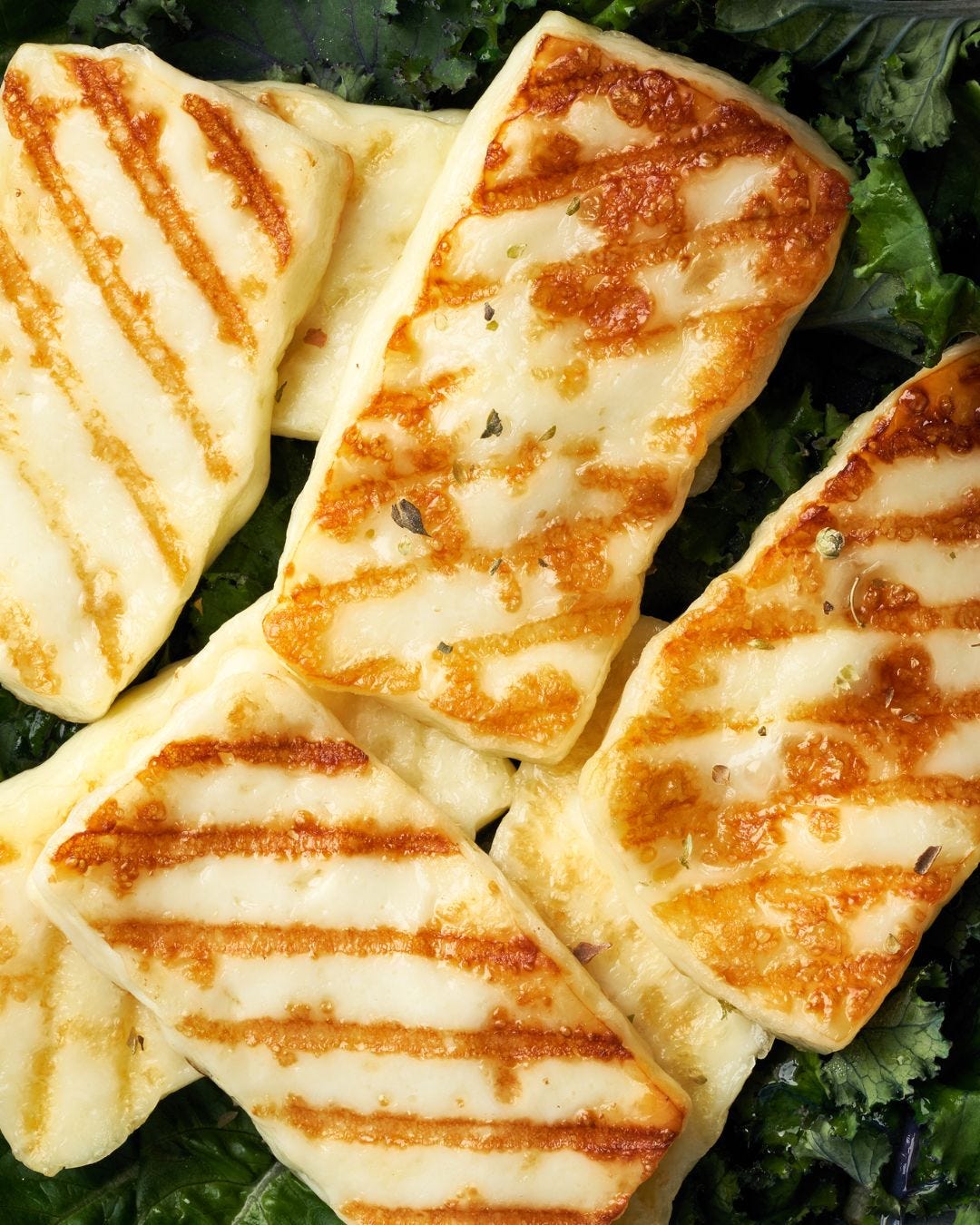
The most classic way to eat halloumi is grilled, simple and delicious. Slice the halloumi into thick pieces (about 1 cm) and place them on a hot grill pan or barbecue. Add a thin layer of extra virgin olive oil to coat the pan, just enough, as halloumi has enough natural fat to crisp up beautifully. Grill each side for 2–3 minutes until golden with deep char lines. Serve immediately with a squeeze of fresh lemon juice. The warmth of the cheese combined with the citrus burst is divine. This is how many Cypriots break a fast, enjoy a mezze, or accompany their morning coffee.
Additional ideas:
Fresh oregano or thyme can be sprinkled over the hot halloumi.
Serve with sliced tomato, cucumber, or olives on the side to create a simple mezze plate.
Pair with warm sourdough bread or pita to soak up the olive oil and lemon juice.
For breakfast, some Cypriots enjoy it with eggs, especially a fried or soft-boiled egg.
2. Halloumi & Watermelon Salad
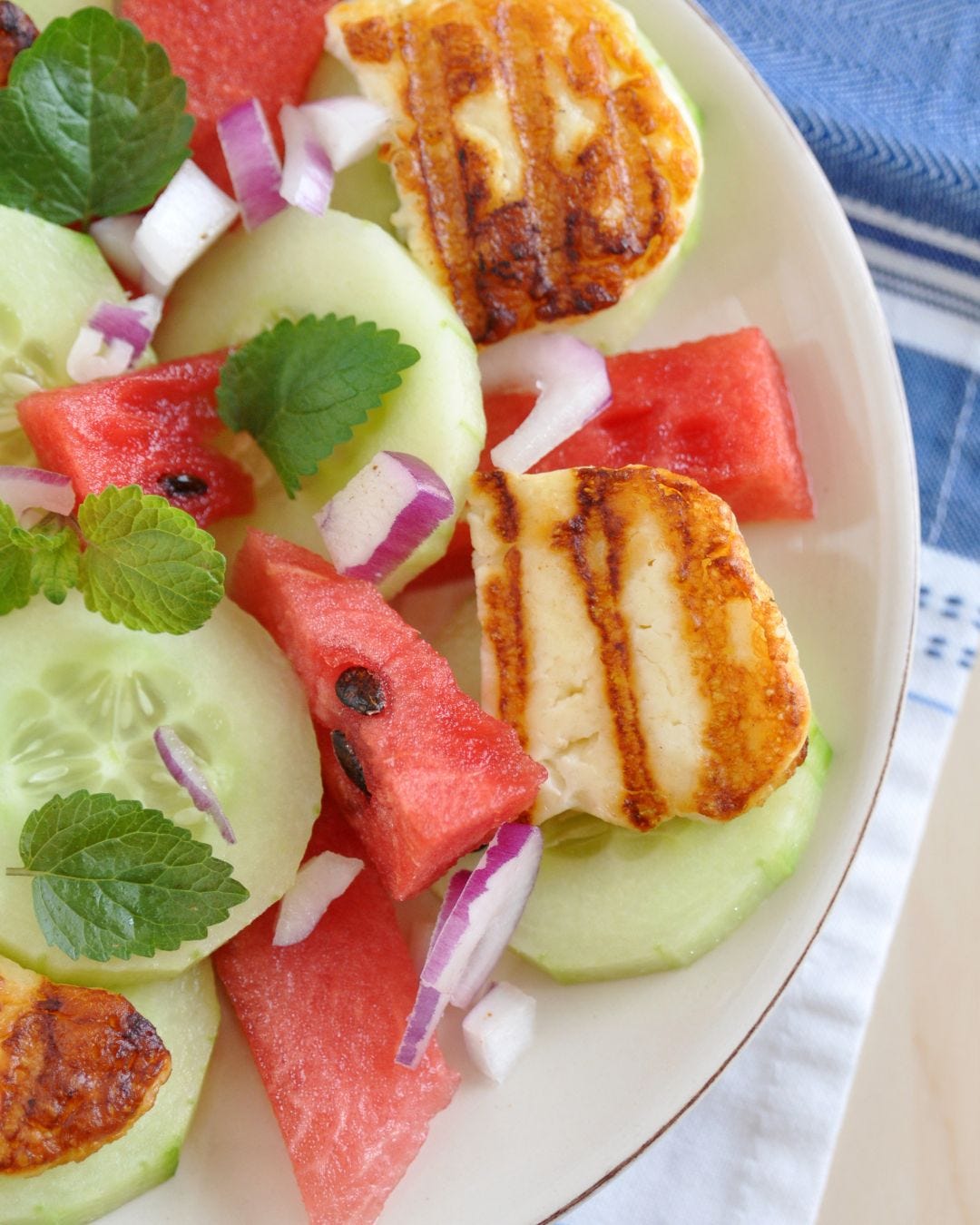
A summertime favourite and an ode to the Mediterranean sun. Dice fresh halloumi and watermelon into bite-sized cubes and toss them together, cold, crisp, and refreshing. Add a handful of torn fresh mint for added freshness. Drizzle with extra virgin olive oil, a splash of fresh lemon juice, sea salt, and cracked pepper. This salad is often served alongside grilled meats, fish, or as a light lunch on sweltering summer days.
Additional ideas:
Add arugula (rocket) for a peppery contrast to the sweet watermelon and salty cheese.
Add cucumber and red onion slices for extra freshness.
A handful of toasted almonds or walnuts adds crunch and healthy fats.
Some families like to add a drizzle of carob syrup or pomegranate molasses for a sweet-sour twist.
Serve it cold, straight from the fridge on hot summer days for maximum refreshment.
3. Halloumi in Soups
This is a lesser-known but much-loved Cypriot tradition. Halloumi is grated or cubed and stirred into hot soups particularly those with risoni (orzo), pasta shells, or elbows in a rich, homemade chicken stock. As it melts, it becomes stringy, soft, and adds a lovely, briny saltiness to the dish. Much like parmesan in Italian kitchens, halloumi is used to finish off a bowl, but here it feels even more indulgent. We also enjoy it stirred into lentil soups, bulgur wheat soups, or Avgolemono (egg-lemon soup). It’s comforting, nourishing, and instantly makes the soup feel like home.
Additional ideas:
Grate halloumi finely for a more parmesan-like effect, especially if adding to soups just before serving.
If cubing it, you can pan-fry the cubes first until golden and then add them to the soup as a topping for added texture.
Works beautifully in Cypriot trahana soup (fermented wheat and yoghurt base), balancing the sourness.
Add it just before serving so it softens without completely melting, preserving its chewy texture.
Other Traditional Cypriot Dishes with Halloumi
Halloumopita (halloumi pie, often made with fresh mint and sometimes raisins, encased in filo or dough)
Bourekia me Halloumi (small pastries filled with grated halloumi, sometimes sweetened or mixed with cinnamon)
Makaronia tou Fournou (oven-baked pasta similar to pastitsio, topped with grated halloumi instead of kefalotyri)
Koupes me Halloumi (cracked wheat parcels filled with halloumi and herbs, a vegetarian variation of meat-filled koupes)
Koukia me Halloumi (broad beans cooked with halloumi, mint, and olive oil)
Louvi me Halloumi (black-eyed beans with silverbeet or spinach, often served with grilled or raw halloumi on the side)
Kolokassi me Halloumi (taro root stew with tomato, celery, and halloumi cubes)
Souvlaki or Sheftalia with Halloumi (halloumi added to skewers or wrapped in pita alongside meat, salad, and dips)